
NEW: Check out All Round’s 2026 Summer Revision Course Schedules here. 10% early bird discount for enrolments on or before 13/06/2026!
IGCSE Chemistry Tutor in Hong Kong (HK)
Achieve top IGCSE Chemistry results with the help of our expert IGCSE Chemistry tutors in HK.
Do you want to improve your score for IGCSE Chemistry? All Round Education Academy boasts a team of some of the best and most qualified IGCSE Chemistry tutors in HK to help you develop the skills you need to overcome academic challenges and ace your IGCSE Chemistry exams. As one of HK’s best IGCSE Chemistry tutors, we deliver tailored IGCSE Chemistry tuition HK in formats including one-to-one IGCSE Chemistry lessons with a private Chemistry tutor Hong Kong, or small-group classes at our HK Chemistry tutoring centre.
Book your free trial now!
Our IGCSE Student Results & Testimonials
A
Our students scored an average of an A or 7.88/9 in IGCSE.
91
91% of our students scored an A*-A in IGCSE.
What makes our IGCSE Chemistry tutors different in HK?
Proven Track Record: 91% of All Round’s students scored an A/A* or 8 or above for each IGCSE subject in the 2025 sitting. Our IGCSE Chemistry tutors consistently guide students from mid-range grades to top marks through systematic exam preparation and targeted revision.
Expert IGCSE Chemistry Tutors: Our expert IGCSE Chemistry tutors have a proven track record of guiding students to top grades on exams. They are well-versed in the IGCSE Chemistry curriculum and excel in distilling complex concepts into simple, fun, and engaging lessons while offering extensive exam drills, revision notes, and homework assignments in HK.
Personalised Tuition: Full comprehension of the theories and applying them in experiments go hand in hand to excel in IGCSE Chemistry. Our tutors will identify each individual’s learning needs and styles, create personalised lessons to help them master difficult topics, and enhance conceptual understanding and procedural applications. Students have the flexibility to choose between 1-on-1 private tutoring or small group classes (3-1, 5-1, or 7-1) at our academy.
Flexible Tutoring Options: We provide flexible options for IGCSE Chemistry tutoring. In addition to in-person tutoring at our centres in Tsim Sha Tsui and Central, and home tutoring services in HK, we also provide private and group tutoring online, meaning that you can conveniently access our expert IGCSE Chemistry tutors from the comfort of your own home.
Past paper-focused for students to become accustomed to their eventual examinations.
Deep insight from experienced teachers who have attained degrees from world-class universities.
Direct comparisons between top-scoring answers and lower-level answers to highlight what students should aspire to do as well as avoid.
Accessing examiner’s reports to specifically assess what actual examiners are directly looking for.
Learner-centred paradigm for students to construct knowledge through gathering and synthesising information and integrating it with the skills of inquiry, communication, critical thinking, and problem-solving.
Understanding IGCSE Chemistry
The IGCSE Chemistry programme helps students acquire knowledge and understanding of chemical facts, concepts and principles and develop a logical approach to problem-solving in a wider context.
Cambridge CIE IGCSE Chemistry (0620) is organised into 12 topic areas. Every IGCSE Chemistry examination question — across Papers 1, 2, 3, 4 and 6 — maps to specific learning outcomes within these 12 topics. AllRound tutors teach systematically through each topic’s Core and Supplement learning outcomes, ensuring no assessable content is left uncovered before the examination. Our specialist CIE IGCSE Chemistry tutoring (Cambridge) covers the CIE IGCSE Chemistry Syllabus (0620 / 0971) in full, while our Edexcel IGCSE Chemistry tutor team delivers the Edexcel IGCSE Chemistry Syllabus (4CH1/4XCH1). We offer dedicated Core and Extended Chemistry tutoring tracks, plus Double Award and Triple Award Chemistry tutoring for combined science routes.
The 12 CIE 0620 topics
Topic 1 — States of Matter: States of matter and the kinetic particle theory (solid, liquid, gas — particle arrangement, movement and energy). Diffusion and its dependence on particle size and temperature. Changes of state (melting, boiling, condensation, sublimation) and the energy changes associated with them. Brownian motion as evidence for particle theory.
Topic 2 — Atoms, Elements and Compounds: Atomic structure — protons, neutrons, electrons; atomic number and mass number; isotopes and their uses (radioactive isotopes in medicine, carbon dating, food irradiation). Electronic configuration and its relationship to the periodic table. The difference between elements, compounds and mixtures. Chemical formulae and the names of common compounds and ions.
Topic 3 — Stoichiometry: The mole concept — definition, Avogadro’s number, molar mass. Calculations involving moles: mole = mass/Mr, mole = volume/molar volume (at rtp), mole = concentration × volume. Empirical and molecular formulae — calculation from percentage composition. Reacting mass calculations using molar ratios. Percentage yield and percentage purity. Volume calculations for gases. Concentration in mol/dm³. Dedicated drills on stoichiometry and the mole concept walk students through every calculation type from first principles.
Topic 4 — Electrochemistry: Electrolysis — the process, terminology (electrolyte, electrode, anode, cathode, cation, anion). Products of electrolysis for aqueous solutions (dilute sulfuric acid, copper sulfate, sodium chloride — selection of products using the reactivity series and concentration). Electrolysis of molten compounds. Industrial applications: electroplating, anodising aluminium, extraction of aluminium (Hall-Heroult process), chlor-alkali process. Targeted electrolysis and redox reactions sessions cover OIL RIG mnemonics, half-equations, and industrial applications.
Topic 5 — Chemical Energetics: Exothermic and endothermic reactions — temperature change, energy level diagrams, examples. Activation energy and the role of catalysts. Bond breaking (endothermic) and bond forming (exothermic) — bond energy calculations for simple reactions. Calorimetry — calculating energy change from temperature change using q = mcΔT. Our chemical energetics and rates of reaction module ties enthalpy diagrams to collision theory and catalyst behaviour.
Topic 6 — Chemical Reactions: Rate of reaction — definition, measurement (volume of gas produced, change in mass, colour change, precipitate formation). Factors affecting rate: concentration, temperature, surface area, catalysts — explained using collision theory and the Maxwell-Boltzmann distribution (qualitative). Reversible reactions and dynamic equilibrium — the effect of changing conditions (Le Chatelier’s principle applied to the Haber process and the Contact process). Redox reactions — oxidation and reduction as electron transfer, oxidation states, oxidising and reducing agents. Dedicated equilibria and the Haber process drills apply Le Chatelier’s principle to high-yield exam scenarios.
Topic 7 — Acids, Bases and Salts: Definitions of acids and bases (Brønsted-Lowry: proton donor/acceptor). pH scale (0–14) and universal indicator. Strong and weak acids (HCl, H2SO4, HNO3 vs ethanoic acid, carbonic acid). Reactions of acids with metals, metal oxides, metal hydroxides and metal carbonates — word and symbol equations. Preparation of salts: by neutralisation (soluble salts), by precipitation (insoluble salts), by reaction with dilute acid. Titration technique — indicator selection (methyl orange for strong acid/base, phenolphthalein). Testing for anions and cations — qualitative analysis of ions in solution. Our acids, bases, and salt preparation sessions drill titration calculations and ionic equation construction.
Topic 8 — The Periodic Table: Structure of the periodic table — groups and periods, relationship between electronic configuration and position. Group I (alkali metals) — physical properties, reactions with water, oxygen and chlorine, trend in reactivity. Group VII (halogens) — physical properties, reactions with metals and hydrogen, displacement reactions, trend in reactivity. Transition elements — physical properties (high density, high melting point, variable oxidation states, coloured compounds, catalytic activity). Group 0 (noble gases) — properties and uses.
Topic 9 — Metals: Physical and chemical properties of metals. The reactivity series — order, evidence (reactions with water, acids, oxygen), displacement reactions. Extraction of metals from their ores: carbon reduction (iron via blast furnace), electrolysis (aluminium), and physical methods (native metals). Alloys — composition, properties, uses (steel, stainless steel, brass, bronze). Rusting — conditions required, prevention methods (painting, galvanising, electroplating, sacrificial protection).
Topic 10 — Chemistry of the Enviroment: Composition of air — percentage of nitrogen, oxygen, argon, carbon dioxide. The water cycle. Purification of water — filtration, sedimentation, chlorination. Tests for water (anhydrous CuSO4 turns blue; anhydrous CoCl2 turns pink) and for pure water (boiling point 100°C, freezing point 0°C). Pollutants — carbon monoxide, sulfur dioxide, nitrogen oxides, particulates — sources and effects. Global warming and the greenhouse effect — evidence, contributing gases, and consequences.
Topic 11 — Organic Chemistry: Homologous series — definition, trend in physical properties. Alkanes (CnH2n+2) — structure, properties, combustion (complete and incomplete), substitution reactions. Alkenes (CnH2n) — structure, properties, addition reactions (with bromine water — test for C=C double bond; with hydrogen; with water), polymerisation (addition polymerisation). Alcohols — ethanol production (fermentation and hydration of ethene), reactions (combustion, oxidation to ethanoic acid). Carboxylic acids — ethanoic acid, reactions with metals, bases and alcohols (esterification). Macromolecules — natural and synthetic polymers (condensation vs addition polymers), plastics and disposal. Our organic chemistry, polymers, and alkanes sequence drills functional group transformations and homologous series patterns.
Topic 12: Experimental Techniques and Chemical Analysis: Lab apparatus, purification methods, and qualitative analysis tests for ions and gases.
Choosing to transition from IGCSE Chemistry to IB and A-Level: what to expect
IGCSE Chemistry provides a strong foundation in bonding, reactions, organic chemistry and basic stoichiometry — but the transition to IB Chemistry or A-Level Chemistry is significant. Students who achieve an A* in IGCSE Chemistry consistently find the first term of IB Chemistry HL or A-Level more demanding than expected, because the depth and mathematical treatment change categorically.
What IB Chemistry adds: Thermodynamics at depth — entropy (ΔS) and Gibbs free energy (ΔG = ΔH − TΔS) — are completely absent from IGCSE. Reaction kinetics adds the Arrhenius equation (k = Ae^(−Ea/RT)), rate expressions and reaction order determination from experimental data — none of which appear in IGCSE Topic 7. Organic chemistry adds mechanistic notation (curly arrows, SN1/SN2 substitution, E1/E2 elimination, electrophilic addition) — IGCSE organic chemistry covers only functional group recognition and reaction products without mechanisms. HL Topic 20 adds spectroscopy (IR, NMR, mass spectrometry) — entirely new territory for IGCSE students.
What A-Level Chemistry adds: A-Level Chemistry (CIE, Edexcel, AQA, OCR) extends IGCSE in all areas simultaneously: quantitative equilibrium (Kc, Kp expressions), electrode potentials and the electrochemical series for cell potential calculations, detailed thermodynamic cycles (Hess’s Law in more complex forms, Born-Haber cycles for lattice enthalpy), and a substantially deeper organic chemistry syllabus with named reactions, mechanism types and spectroscopic identification.
Through a comprehensive assessment of your current abilities, our expert IGCSE Chemistry tutors help students build a solid understanding of the learning objectives within the syllabus and also help with past paper drills and technique building. Structured IGCSE Chemistry past papers practice sits at the core of every one of our Chemistry exam preparation courses HK.
Try a free IGCSE Chemistry trial lesson with All Round Education’s highly qualified and experienced tutors in HK. Get a personalised learning plan tailored to your needs and learn key reading and writing skills. Our dedicated team of IGCSE English tutors will help you attain top grades in your exams.
What our IGCSE Chemistry tutors in HK offer
At All Round Education Academy, our highly specialised and experienced IGCSE Chemistry tutors take a learner-centred approach to ensure students’ holistic development. Our tutors focus on building students’ confidence to tackle any problem by providing a solid foundation in the concepts and learning objectives of the IGCSE Chemistry syllabus. We also provide tried-and-true examination skills and tactics through past paper drills, ensuring that students know how to arrive at the correct answers in a step-by-step manner. Expect to be well-prepared for your exams with our highly dedicated and qualified IGCSE Chemistry tutors across our centres in Hong Kong.
Are you ready to improve your exam performance?
Subjects offered by the IGCSE
For other subjects not listed here, please contact our course directors now! Contact us today via WhatsApp at +852 9754 9176 to find out how our tutors in HK can help you excel in your IGCSE subjects.
Over the past years, All Round has proven to over thousands of students and parents that they can put their trust in us.
With the right tools and techniques provided by our IGCSE tutors at All Round Education HK, we believe that any student can achieve the outstanding results they deserve with hard work and dedication. Not only do our tutors consolidate your knowledge throughout the IGCSE programme, but they also help you become a better learner by teaching essential studying strategies across a variety of subjects, including Chinese, Science, Economics, and more.
International General Certificate of Secondary Education (IGCSE) Program
What is the IGCSE?
The International General Certificate of Secondary Education (IGCSE) is the most widely studied international secondary qualification in Hong Kong, typically taken by students in Years 10 and 11 (ages 14–16). Offered by Cambridge Assessment International Education (Cambridge CIE) and Pearson Edexcel, IGCSE is the standard pre-16 qualification at the vast majority of Hong Kong international schools.
IGCSE grades are recognised globally and form a critical foundation for the next stage of education — whether that is the IB Diploma Programme (IBDP), A-Levels or other post-16 pathways. Strong IGCSE results, particularly at A* and A in Extended tier subjects, open the door to HL subject choices at IB and to competitive UK university A-Level programmes.
Are you ready to improve your exam performance?
Join over 15000+ students in achieving an A* or level 9 with our IGCSE tutors!
At All Round our team of highly trained IGCSE tutors have delivered more than 1,000,000 tutoring hours since inception. With a rigorous training programme, the resources we provide and the quality of lessons we deliver are unparalleled by any other centre in Hong Kong. Our team consists of IGCSE English tutors, IGCSE Mathematics tutors, IGCSE Biology tutors, IGCSE Chemistry tutors, IGCSE Physics tutors, IGCSE Chinese tutors, IGCSE Economics tutors and many more.
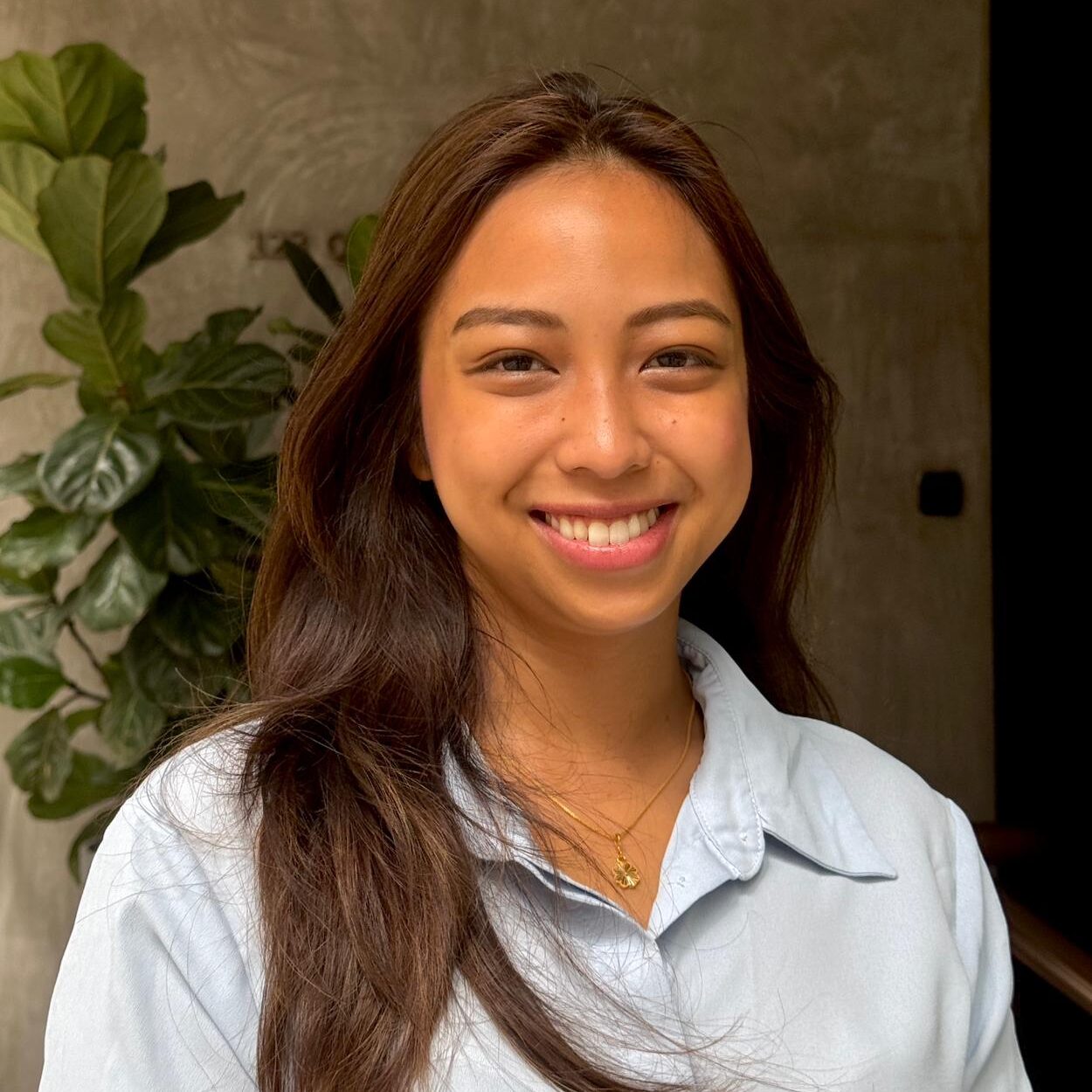
- Masters of Science from the University of Monash, Australia
- Bachelors of Science in Biomedical Sciences from the University of Nottingham, UK
- 8+ Years of experience teaching IGCSE Biology, Chemistry and Physics
- Tutored 500+ Biology, Chemistry and Physics students
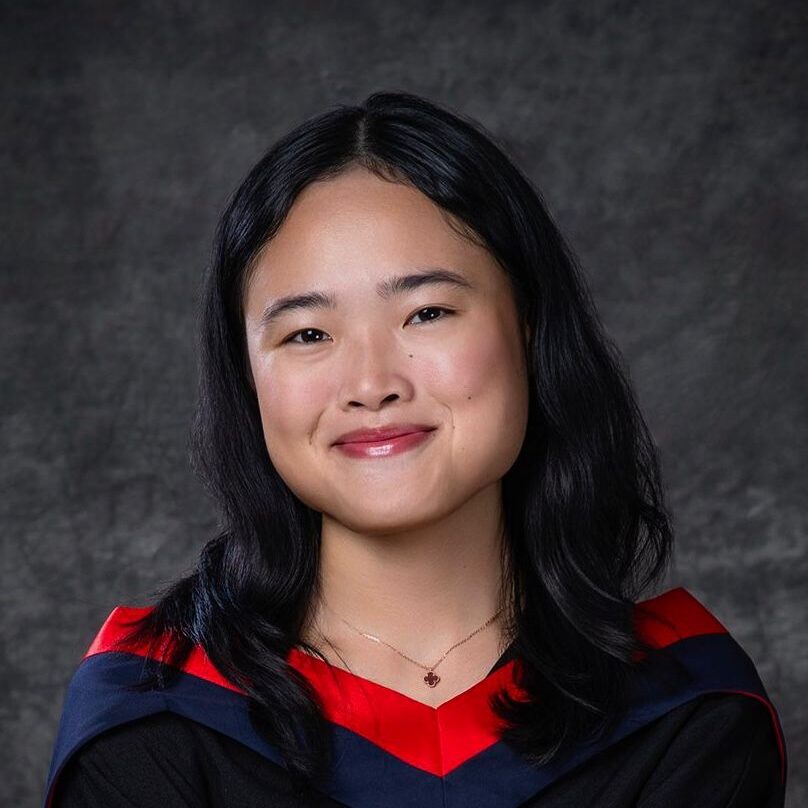
- Bachelors of Science in Biomedical Sciences from the University of Hong Kong
- 3+ Years of experience teaching IGCSE Biology, Chemistry and Physics
- Tutored 500+ Biology, Chemistry and Physics students

- University Degree in Medicine and Dental Surgery from BF University of Health Sciences India
- Advanced Diploma in Mathematics Secondary Teaching
- 10+ Years of experience teaching IGCSE Biology, Chemistry and Physics
- Tutored 500+ IGCSE Biology, Chemistry and Physics students
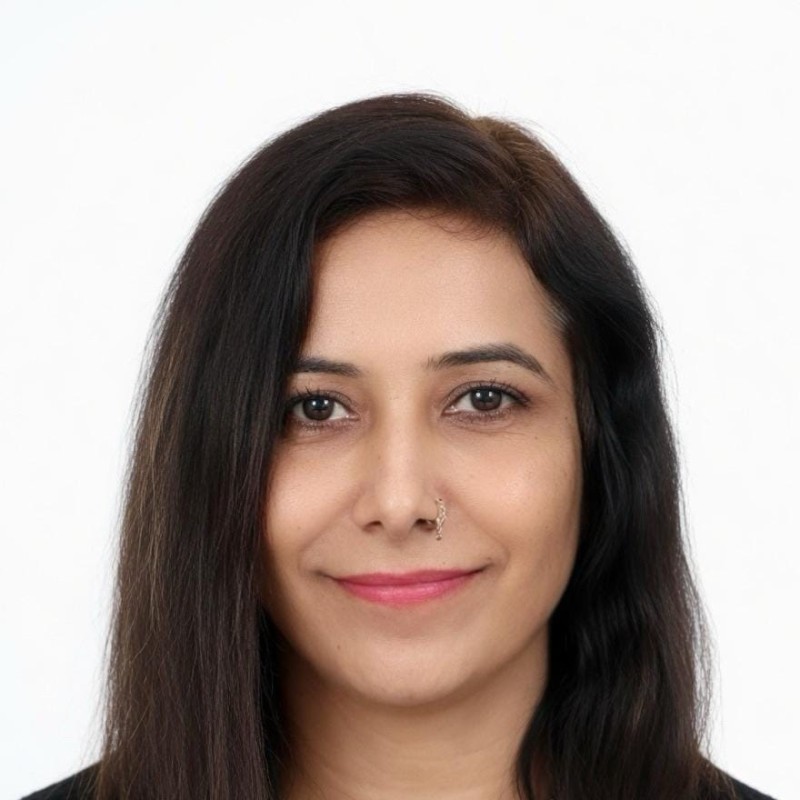
- Bachelor of Engineering (First Class Honors)
- 13+ Years of teaching experience in IGCSE Biology, Chemistry and Physics
- Tutored 1000+ Biology, Chemistry and Physics students
Latest from our blog
Expert tips, exam strategies, and study guides from our IGCSE Chemistry tutors in Hong Kong.

Hong Kong's exam season crunch is brutal. Between mock examinations, relentless school deadlines, CAS activities, and the mounting pressure to...

If you're studying IGCSE Mandarin at an international school in Hong Kong, you've probably realised:...

If you're studying IGCSE Chinese at an international school in Hong Kong, you've probably noticed on...
Are you ready to improve your exam performance?
Frequently Asked Questions (FAQs): IGCSE Chemistry Tutoring at All Round Education Academy HK
1. Do you cover both Edexcel and Cambridge IGCSE Chemistry?
Yes. Our lessons cover Edexcel, Cambridge and various other examination boards IGCSE Chemistry syllabuses. An experienced IGCSE Chemistry tutor in HK will help students understand the key topics, practise exam-style questions, and prepare effectively for each exam board’s assessment format.
2. How do you prepare for practical-style questions assessed on written papers?
Our IGCSE Chemistry tutors in HK focus on experimental design, data interpretation, and question analysis to prepare students for the practical-style questions commonly tested in Papers 1 and 2.
3. What are the primary topics covered in Edexcel IGCSE Chemistry?
- Principles of Chemistry – atomic structure, bonding, and periodic table
- Inorganic Chemistry – metals, acids, bases, and reactivity
- Physical Chemistry – energetics, rates of reaction, and equilibrium
- Organic Chemistry – alkanes, alkenes, alcohols, and polymers
Our IGCSE Chemistry tutors in HK ensure students understand how each module connects to real-world chemistry and exam applications.
4. Do you offer online, in-centre, and home tutoring in HK?
Yes, students can choose from online lessons, in-person classes at our centres, or home tutoring across Hong Kong, all led by qualified IGCSE Chemistry tutors.
5. How do you track progress?
We assess progress through regular quizzes, mock papers, and concept checks. Our tutors provide detailed feedback and assign targeted past-paper questions to address specific weaknesses.
6. Is there a free trial?
Yes, every new student can book a free trial session with an IGCSE Chemistry tutor at our centre in HK. This includes a diagnostic review, a short lesson, and a personalised learning plan based on your academic goals.
7. What are the most challenging topics in IGCSE Chemistry?
Many students find certain areas of the syllabus more demanding. These often include chemical calculations, reaction mechanisms in organic chemistry, redox reactions, and energy change calculations.
With guidance from an experienced IGCSE Chemistry tutor in HK, students can break down complex ideas into manageable steps and gain confidence through practice questions.
8. Why do students find chemistry calculations difficult?
Chemistry calculations require both conceptual understanding and mathematical skills. Students must apply formulas correctly, interpret chemical equations, and solve problems involving mole calculations, energy changes, or equilibrium.
An IGCSE Chemistry tutor in HK can guide students step by step through these calculations and help them practise exam-style questions until the process becomes clearer.
9. How important are practical and laboratory skills in IGCSE Chemistry?
Even though many exams assess practical knowledge through written papers, students still need to understand laboratory techniques, experimental design, and data interpretation.
Working with an IGCSE Chemistry tutor in HK helps students learn how to analyse experiment results, understand chemical reactions, and explain observations clearly in exams.
10. What are the main areas covered in the IGCSE Chemistry syllabus?
The syllabus usually focuses on three main areas:
- Physical Chemistry – atomic structure, bonding, states of matter, energy changes, reaction rates, and equilibrium.
- Inorganic Chemistry – the periodic table, properties of elements, metals, acids, and bases.
- Organic Chemistry – structure and reactions of carbon compounds, such as hydrocarbons, alcohols, and polymers.
A qualified IGCSE Chemistry tutor in HK can help students connect these topics and apply them effectively in exam questions.
11. How many papers are in IGCSE Chemistry?
Cambridge CIE 0620 IGCSE Chemistry uses three papers for assessment. Extended tier students sit Paper 2 (MCQ questions covering Core + Supplement content), Paper 4 (theory, short-answer and extended response, Core + Supplement content, 1 hour 15 minutes) and either Paper 5 (practical test in a school laboratory) or Paper 6 (Alternative to Practical — a written paper, 1 hour). Paper 6 is the near-universal choice for Hong Kong international school students. Core tier students sit Paper 1 (MCQ) and Paper 3 (theory) instead of Papers 2 and 4, plus Paper 5 or 6. For Edexcel IGCSE Chemistry (4CH1), there are only two theory papers — Paper 1 and Paper 2 — with no separate practical paper. For help in one or more of these papers, reach out to one of our IGCSE tutors.
12. Core or Extended: which should I choose?
For almost all students at Hong Kong international schools, the Extended tier is the correct choice. Core tier permanently caps the maximum achievable grade at C — a grade that is insufficient for entry to IB Chemistry HL or A-Level Chemistry at most post-16 schools, and that signals to IB admissions that the student has not been exposed to the full IGCSE Chemistry syllabus. The extended tier covers all 14 topics at both Core and Supplement depth, and allows grades A* through E. One scenario where the Core tier is genuinely appropriate is when a student has significant conceptual gaps across multiple topics that make Supplement content preparation unrealistic, and when a grade C is an acceptable post-16 outcome. Reach out to our IGCSE tutors here at All Round Education for advice on tier placement after a diagnostic session.
13. How does IGCSE Chemistry prepare for IB Chemistry?
IGCSE Chemistry provides a strong foundation in atomic structure, bonding, stoichiometry, chemical reactions and organic chemistry basics — content that directly connects to IB Chemistry Topics 1–6 and Topic 10. The transition to IB Chemistry adds significant mathematical depth (Gibbs free energy, Arrhenius equation, Henderson-Hasselbalch equation — none of which appear in IGCSE), organic chemistry mechanisms (curly-arrow notation, SN1/SN2/E1/E2 — absent from IGCSE), and HL-only spectroscopy content (IR, NMR, mass spectrometry — entirely new territory). AllRound’s IGCSE-to-IB bridging programme covers these gaps over the summer before IB1.
14. When should I seek out an IGCSE Chemistry tutor?
The tutors and advisors here at All Round Education recommend beginning dedicated IGCSE Chemistry tutoring in Year 10 — ideally in the first term, when the Extended tier Supplement content is being introduced and when the habit of mark-scheme-aware study can be built before school assessments begin. Students who begin in Year 9 for foundation-building — particularly on the mole concept and bonding — have the most flexibility and the strongest exam results. Students who join AllRound in Year 11 for pre-exam preparation are supported with a focused programme prioritising stoichiometry, organic chemistry, Paper 6 technique and MCQ strategy. Starting at least six months before the May/June examination session will help you ease into your new study schedule.